
One of the most common questions we hear from homeowners and businesses considering solar is:
“Will solar even work on my roof?”
It’s a fair question — and the good news is that most roofs in the UK are suitable for solar panels. But there are a few key factors that determine how effective a system will be.
Below is a simple UK-specific checklist to help you understand whether your roof is a good candidate for solar PV — and when it makes sense to get a professional assessment.
1. Roof Direction: Which Way Does It Face?
South-facing roofs are ideal, as they receive the most sunlight throughout the day.
However, that doesn’t mean other directions won’t work:
- ✅ South-facing – Best overall performance
- ✅ East or West-facing – Very common and still highly effective
- ⚠️ North-facing – Usually less suitable, but not impossible in some cases
Many UK homes and commercial buildings use east–west systems to generate power steadily across the day — which can actually suit real-world energy use better than a single peak.
2. Roof Pitch: Is the Angle Right?
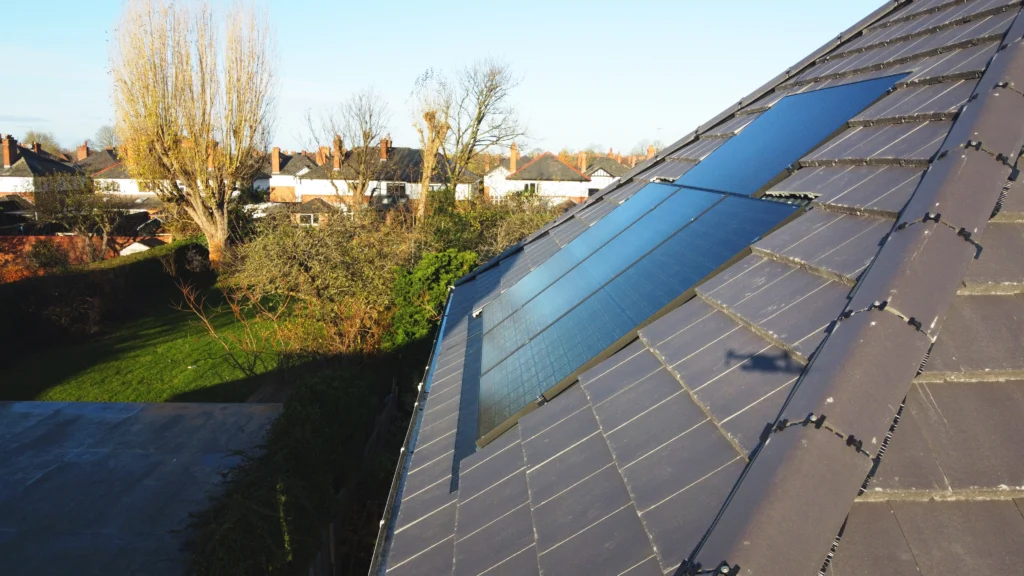
Most UK roofs fall well within the ideal range for solar panels.
- Ideal pitch: 30–40 degrees
- Flat roofs: ✅ Still suitable using mounting frames
- Steeper or shallower roofs: ✅ Usually fine with minor efficiency changes
Flat roofs are especially common on commercial buildings, schools, warehouses and leisure centres — and they often provide excellent space for larger systems.
3. Roof Size & Available Space
You don’t need a huge roof to benefit from solar.
What matters is:
- Clear, usable roof space
- Room for panels without obstructions
- Layout that allows panels to be grouped efficiently
As a rough guide:
- Homes often need space for 8–16 panels
- Businesses typically scale systems to available roof area and energy use
If your roof is larger than average, solar becomes even more attractive.
4. Shade: Trees, Chimneys & Nearby Buildings
Shading doesn’t automatically rule out solar — but it does matter.
Common shading issues include:
- Chimneys
- Trees
- Nearby buildings
- Roof structures or plant equipment (on commercial sites)
Modern systems can use panel-level optimisation to reduce the impact of shading, meaning one shaded panel doesn’t drag down the entire system.
This is where a proper survey really pays off.

5. Roof Condition: How Old Is Your Roof?
Solar panels typically last 25+ years, so your roof needs to be in good condition.
Ask yourself:
- Is the roof structurally sound?
- Has it been replaced or refurbished recently?
- Is it due major work in the next few years?
If a roof replacement is needed, it’s often best to do that before installing solar — especially on commercial properties.
6. Roof Type: What Is It Made Of?
Solar can be installed on most common UK roof types, including:
- Tile roofs
- Slate roofs
- Metal roofs
- Flat roofs (felt, membrane, etc.)
Specialist mounting systems are used depending on the roof structure to ensure everything is secure, weatherproof and compliant.
7. Planning Permission: Do You Need It?
In most cases:
- ❌ No planning permission needed for homes
- ❌ No planning permission needed for most commercial buildings
Exceptions can include:
- Listed buildings
- Conservation areas
- Certain flat roof installations
This is usually quick to check during a survey.
So… Is Your Roof Suitable?
If your roof:
- Faces south, east or west
- Has reasonable pitch or flat space
- Isn’t heavily shaded all day
- Is structurally sound
👉 There’s a very good chance solar will work for you.
But every building is different — and assumptions can be misleading.
The Best Way to Know for Sure
The fastest and most accurate way to find out is with a free roof assessment.
At Genfit, we look at:
- Roof layout and structure
- Orientation and shading
- Energy usage
- Potential system size and savings
No pressure. No obligation. Just clear, honest advice.
👉 Book a free solar roof assessment today and find out if your building is right for solar.