
Electric vehicles (EVs) are revolutionizing the automotive industry, offering a cleaner and more sustainable mode of transportation. Central to the EV experience is the charging process, where electricity is transferred from a charging station to the vehicle’s battery. In this blog, we’ll take a closer look at the inner workings of EV chargers, exploring how they convert electrical energy from the grid into power for your vehicle.
Introduction to EV Charging
At its core, the process of EV charging involves transferring electrical energy from a power source to the vehicle’s battery pack. This is achieved through a network of charging stations equipped with specialized equipment designed to safely and efficiently deliver electricity to EVs.
Types of EV Chargers
There are several types of EV chargers available, each with its own charging speed and compatibility with different EV models. These include Level 1 chargers (which typically use a standard household outlet), Level 2 chargers (which require a dedicated charging station), and DC fast chargers (which provide rapid charging capabilities).
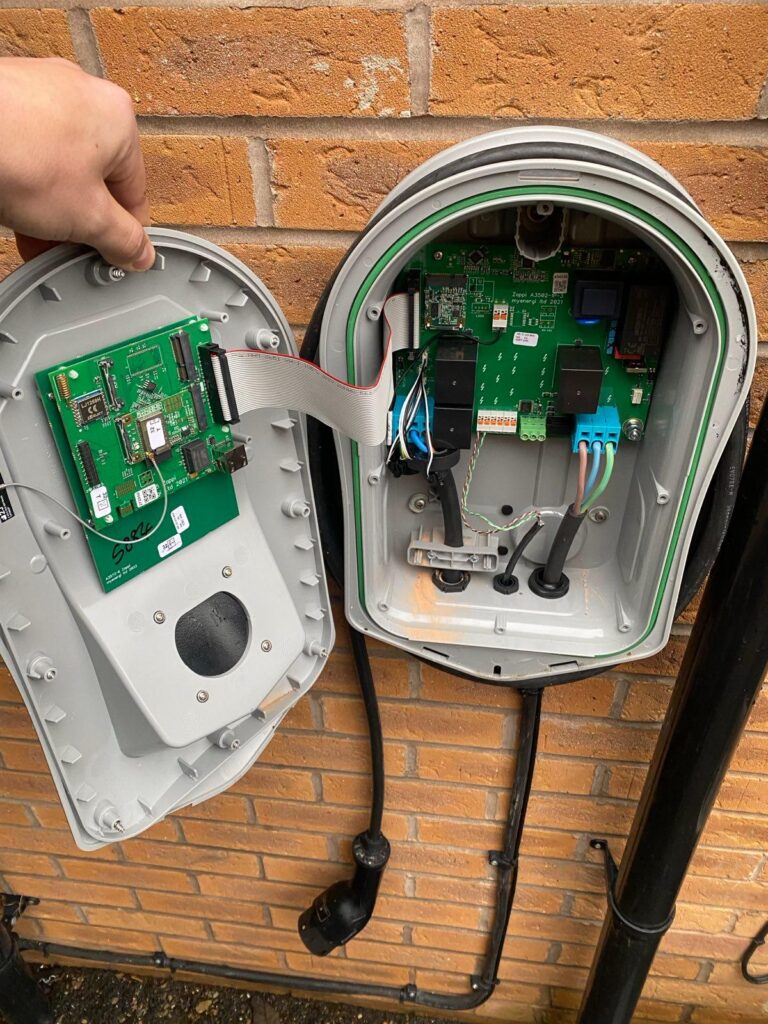
The Components of an EV Charger
While the specifics may vary depending on the type and manufacturer, most EV chargers consist of several key components:
- Power Source: The electricity needed to charge the vehicle is typically sourced from the grid or renewable energy sources such as solar or wind.
- Charging Station: This is where the physical connection between the charger and the vehicle occurs. Charging stations come in various forms, including wall-mounted units, pedestal chargers, and public charging stations.
- Charging Cable: The cable serves as the conduit through which electricity flows from the charging station to the vehicle’s charging port. It is equipped with connectors that are compatible with the vehicle’s charging inlet.
- Control Unit: The control unit manages the flow of electricity from the power source to the vehicle’s battery, ensuring safe and efficient charging. It may also include features such as user authentication, payment processing, and remote monitoring.
- Safety Features: EV chargers are equipped with various safety mechanisms to protect against electrical hazards, overheating, and other potential risks. These may include ground fault protection, overcurrent protection, and temperature monitoring systems.
The Charging Process
Once the EV is plugged into the charging station and the charging session is initiated, the following steps typically occur:
- Authentication: Some charging stations require users to authenticate themselves before initiating a charging session. This can be done through a mobile app, RFID card, or other means of identification.
- Communication: The charger communicates with the vehicle to establish a connection and determine the appropriate charging parameters, such as voltage, current, and charging speed.
- Power Delivery: Once the parameters are set, the charger begins delivering electricity to the vehicle’s battery pack. The power flow is monitored and adjusted as needed to ensure optimal charging performance.
- Charging Status: Throughout the charging process, users can monitor the status of their vehicle’s battery through the charger’s display or a mobile app. This allows them to track charging progress and receive notifications when the charging session is complete.
Conclusion
In conclusion, EV chargers play a crucial role in enabling the widespread adoption of electric vehicles by providing a reliable and efficient means of charging. From the power source to the vehicle’s battery, the charging process involves a series of carefully orchestrated steps to ensure safe and effective power delivery. As technology continues to evolve, EV chargers will continue to improve in terms of charging speed, convenience, and accessibility, further driving the transition towards a greener and more sustainable transportation ecosystem.