Integrated solar replaces sections of the conventional roof covering, creating a cleaner, lower-profile alternative to panels mounted above the tiles. Designed by Genfit around your roof and how your household uses energy.
In-roof solar suits homes where the roof is being built or replaced: new-build properties, extensions and houses already undergoing re-roofing. Because the panels replace sections of the roof covering rather than sitting above it, the result is a flush, streamlined finish with no raised mounting equipment.
If your existing roof is in good condition, an on-roof system is normally the simpler and more economical option. For homes with an unsuitable or shaded roof but plenty of land, ground-mounted solar is the other route.
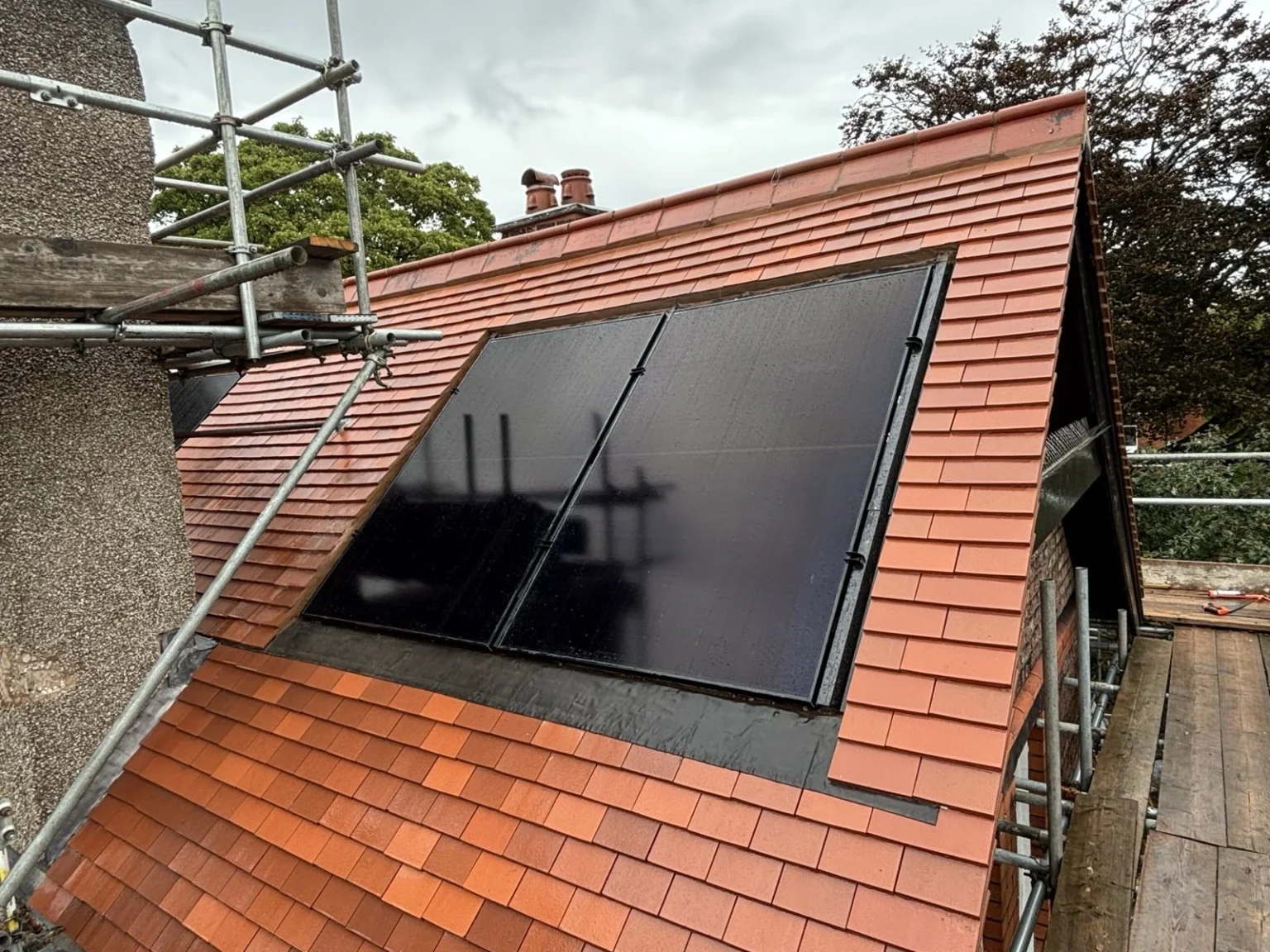

Panels sit flush with the surrounding roof, creating a smart, modern finish without raised mounting equipment.

The panels replace the roof covering within the array area and form part of the finished roof, so one system does two jobs.
Correctly designed and installed, the panels and their flashing kit form part of the weatherproof roof covering and protect the property beneath.

Generate renewable electricity to reduce your reliance on the grid and lower household energy bills.
Consider solar before the roofing work begins. Including it early lets the roofing and electrical design be coordinated, and the roof set out around the panels.
Roof orientation, pitch, available area and shading feed into a system design and generation forecast, along with the in-roof mounting system that suits your roof covering.
The in-roof system and panels go in alongside the roofing works, followed by the inverter and the connection into the house.
The system is tested, commissioned and connected to its monitoring platform. Where required we manage the DNO application, MCS documentation and handover pack.
Smaller properties or limited roof space
Typical family homes
Larger homes or higher electricity use
Large properties with significant roof space or demand
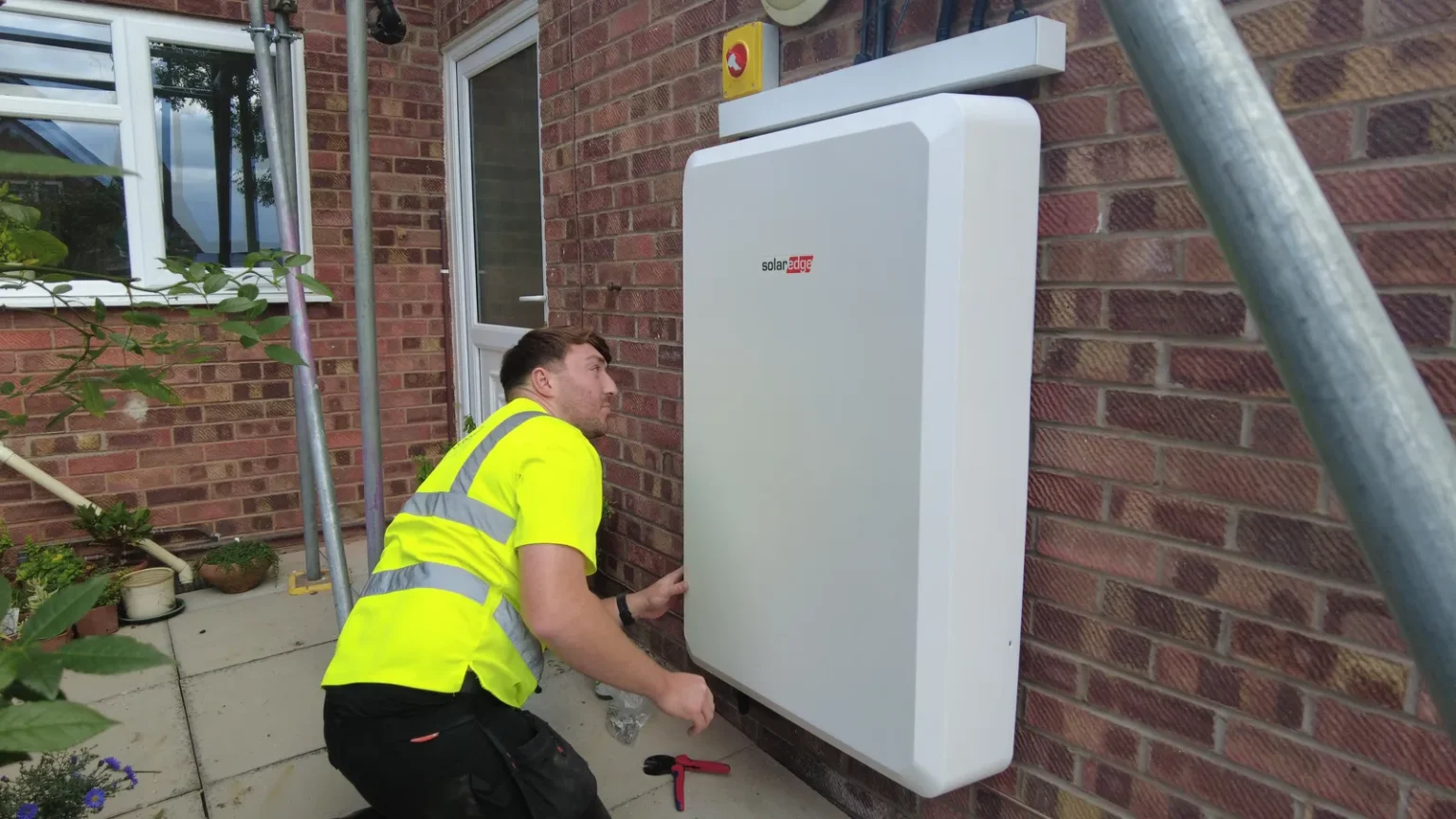
Where it suits the property, battery storage lets you store daytime generation for the evening, and an EV charger lets you run the car on your own electricity. Both can be designed in from the start or added later.