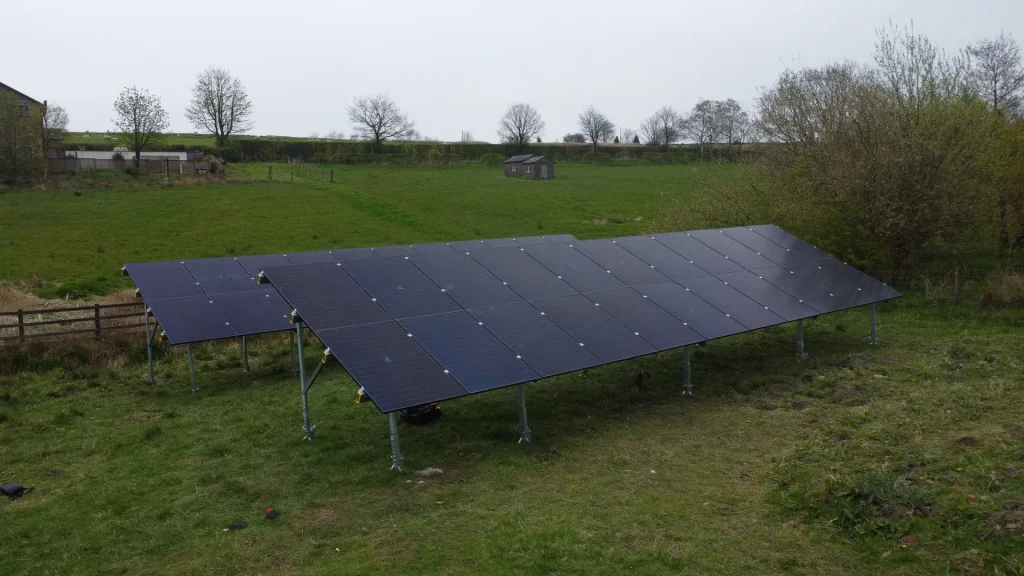
Ground-mounted solar is the right choice when a roof is shaded, too small, unsuitable for mounting panels or faces the wrong way. It also suits homeowners with larger gardens, paddocks or adjoining land who want a bigger system than their roof could hold.
As a guide, allow around 25 to 40 square metres of clear, unshaded land for a typical 4 to 6 kWp system. Larger systems, or layouts in several rows, need more.
Where a suitable roof is available, roof-mounted solar normally takes up less of your usable outdoor space and may be the simpler option.
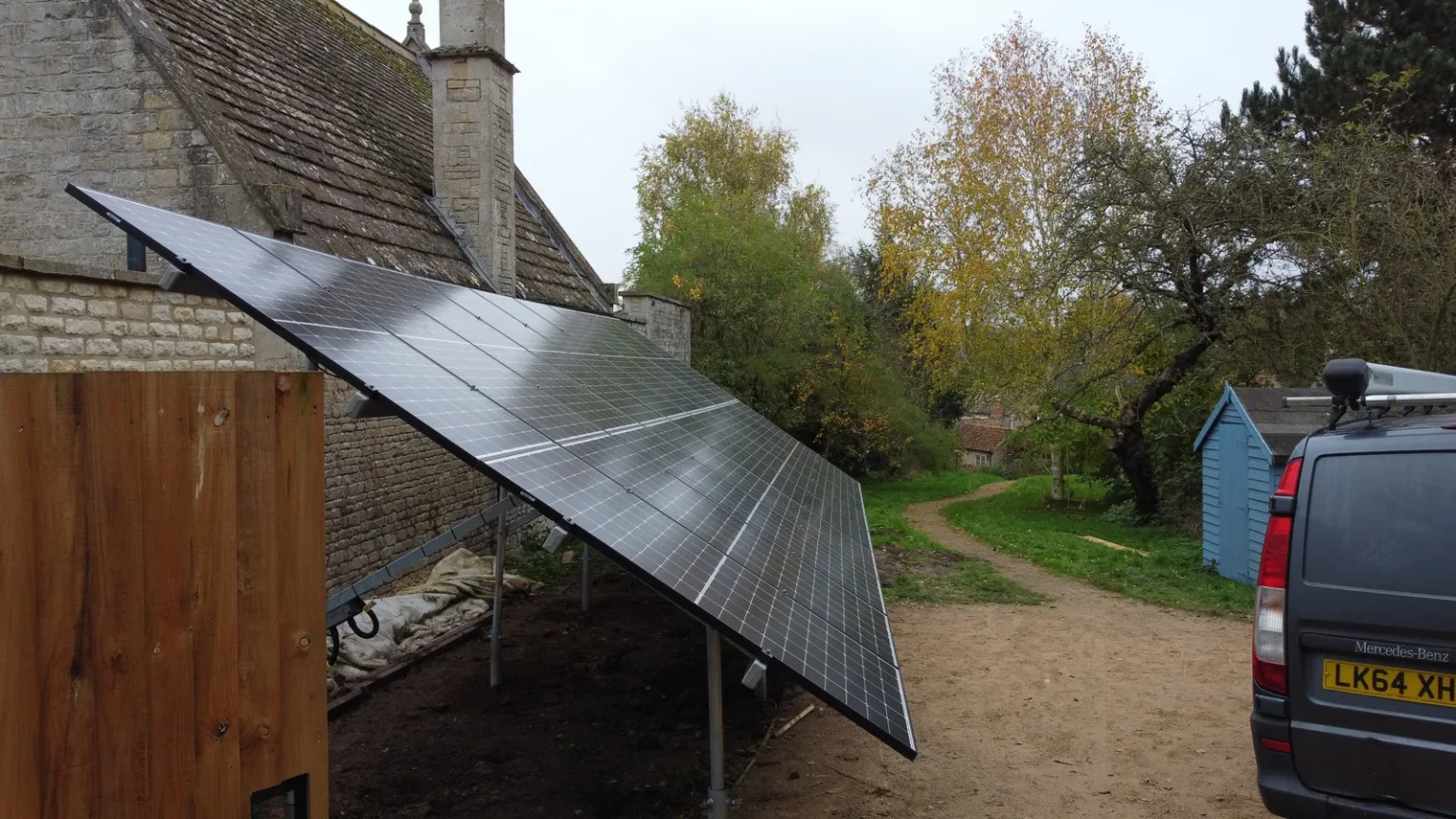
We look at the available land, your electricity usage and the best position for the array: orientation, shading, ground conditions, cable routes and the distance back to the house.
The mounting structure is secured into the ground and the panels set at an orientation and angle that makes the most of the site.
Cabling runs back to the property, usually underground, and connects to the inverter and your home's electrical system.
Battery storage can be added so surplus daytime generation is kept for use later in the day.
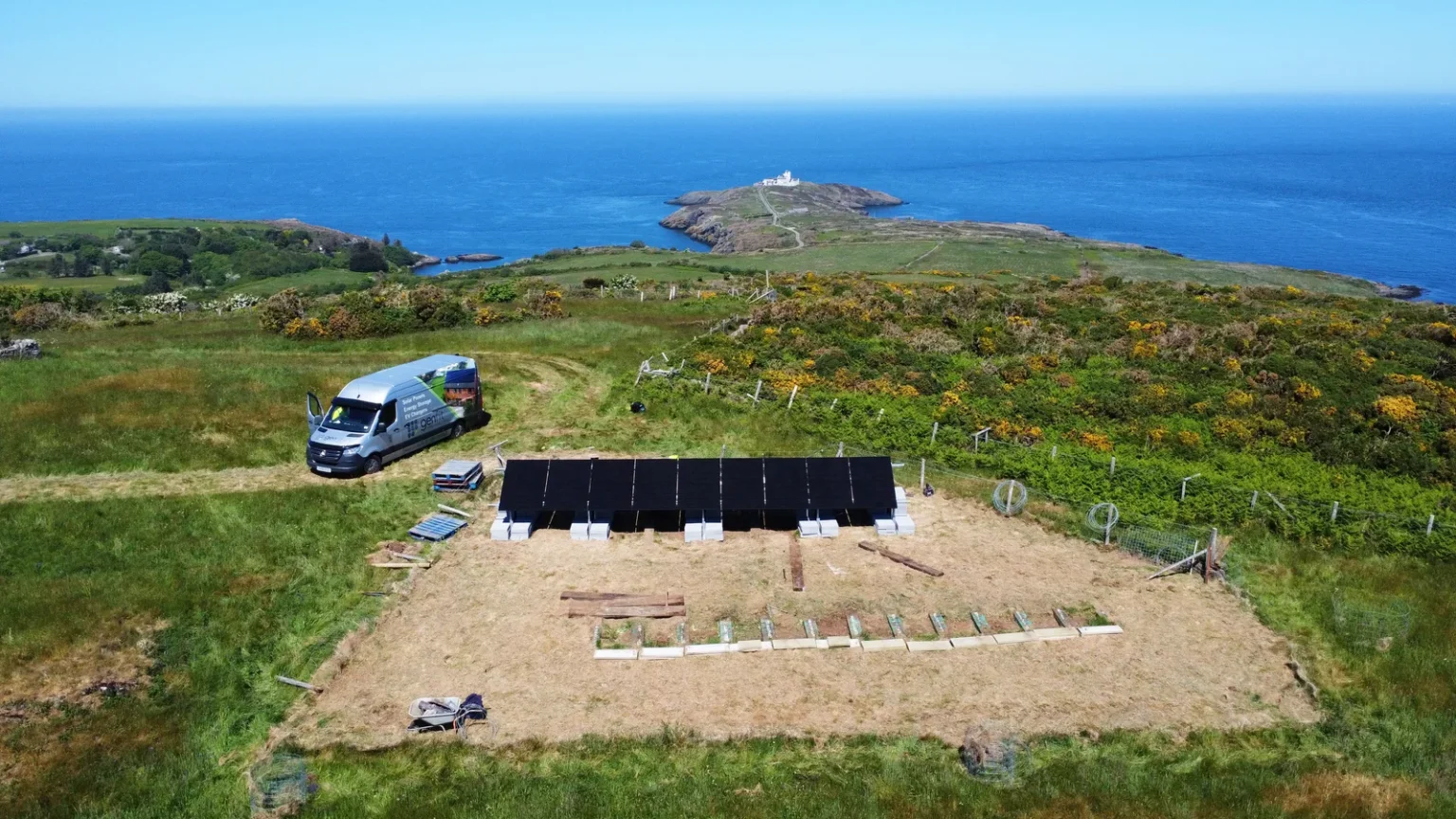
Planning matters more for ground-mounted systems than for roof-mounted ones. In England and Wales, permitted development rights for standalone domestic solar are restricted, including an array size limit of 9 square metres. Most full-size home ground-mount systems are larger than that, so planning permission will often be required.
We check the planning position at an early stage and recommend confirming the requirements for your property with the local planning authority before installation.
9 to 10 panels, 3,400 to 4,000 kWh a year, 25 to 30 m² of land
13 to 15 panels, 5,100 to 6,000 kWh a year, 30 to 40 m² of land
18 to 20 panels, 6,800 to 8,000 kWh a year, 40 to 55 m² of land
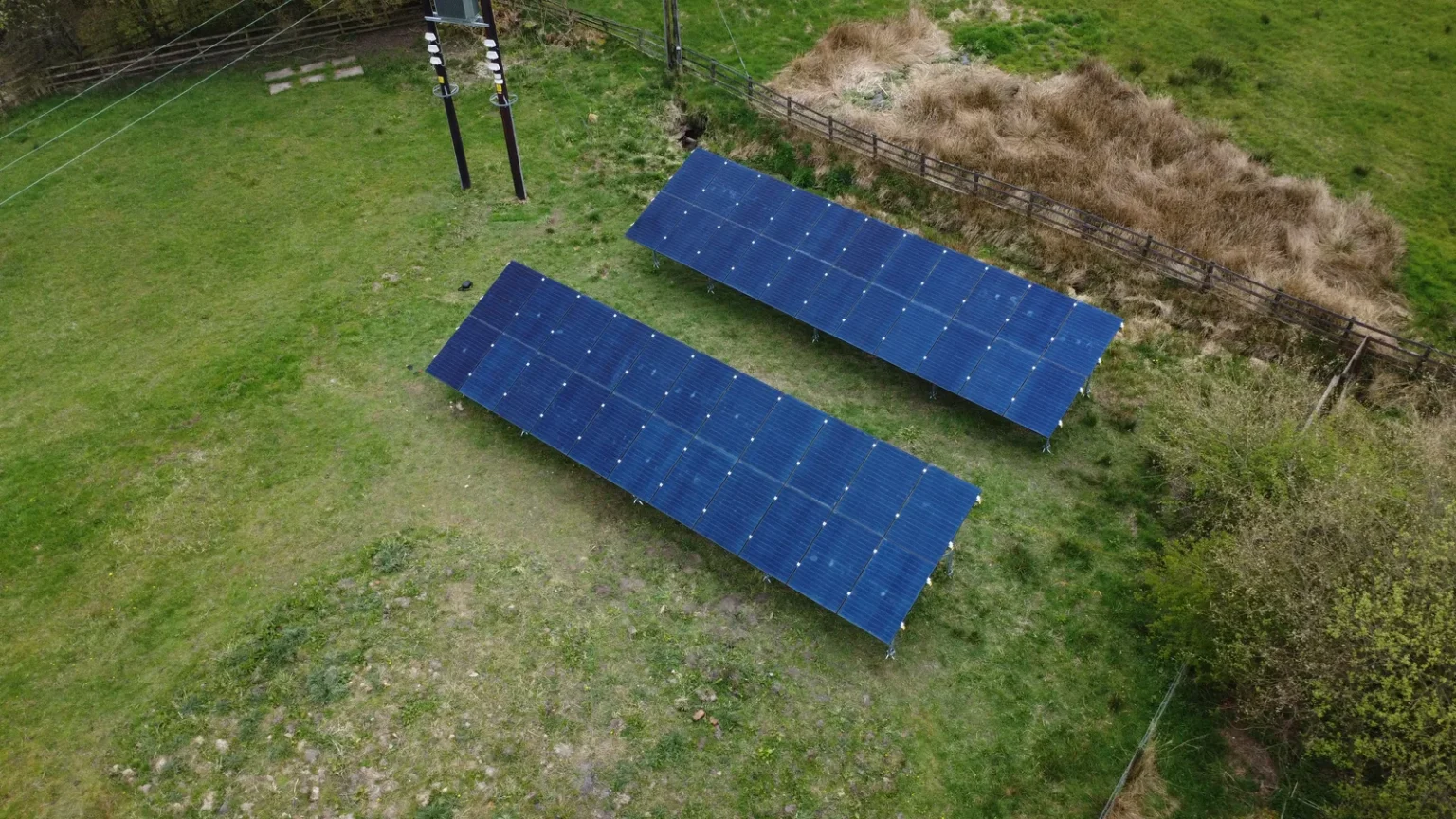
Designed for a homeowner with enough garden to position the array away from the house. The panels sit at the rear of the garden facing south, on a driven ground-mounting structure, with cabling routed underground back to the property and a Tesla Powerwall storing the surplus.