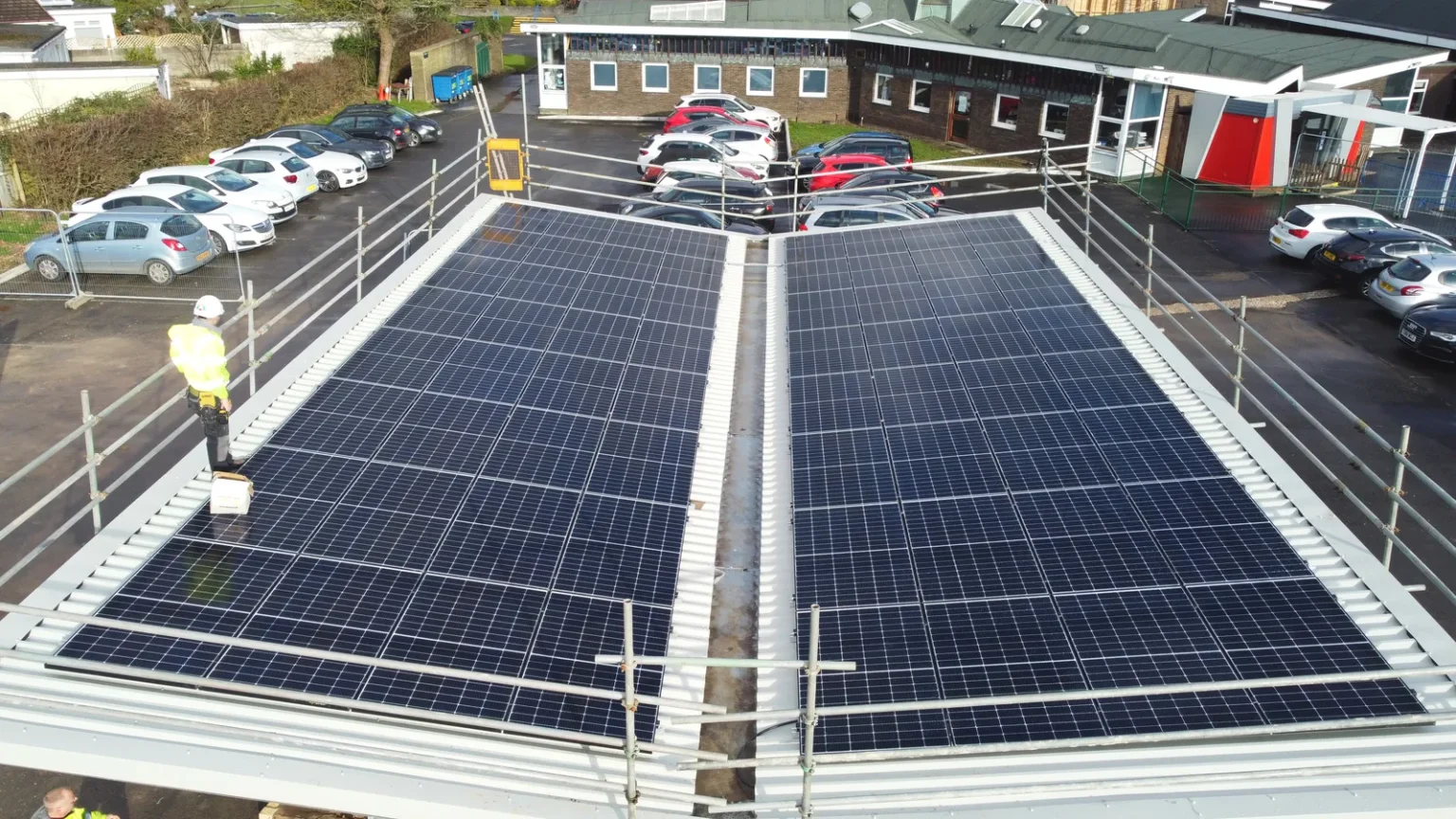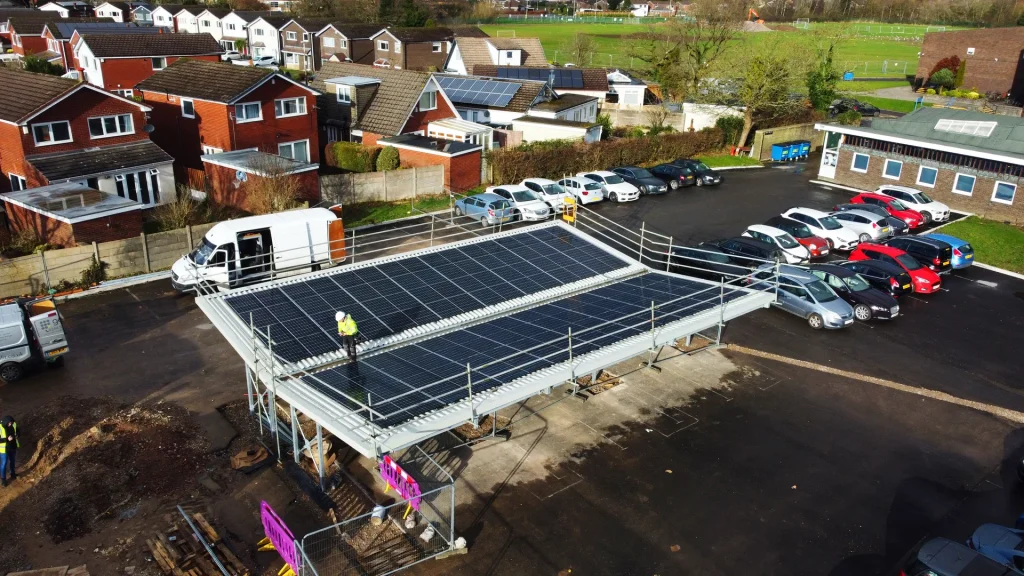
























Solar car ports suit organisations with large car parks where the roof is limited, unsuitable or already full. They add generation without using more land, give covered parking, and put the power right where EVs are charged.
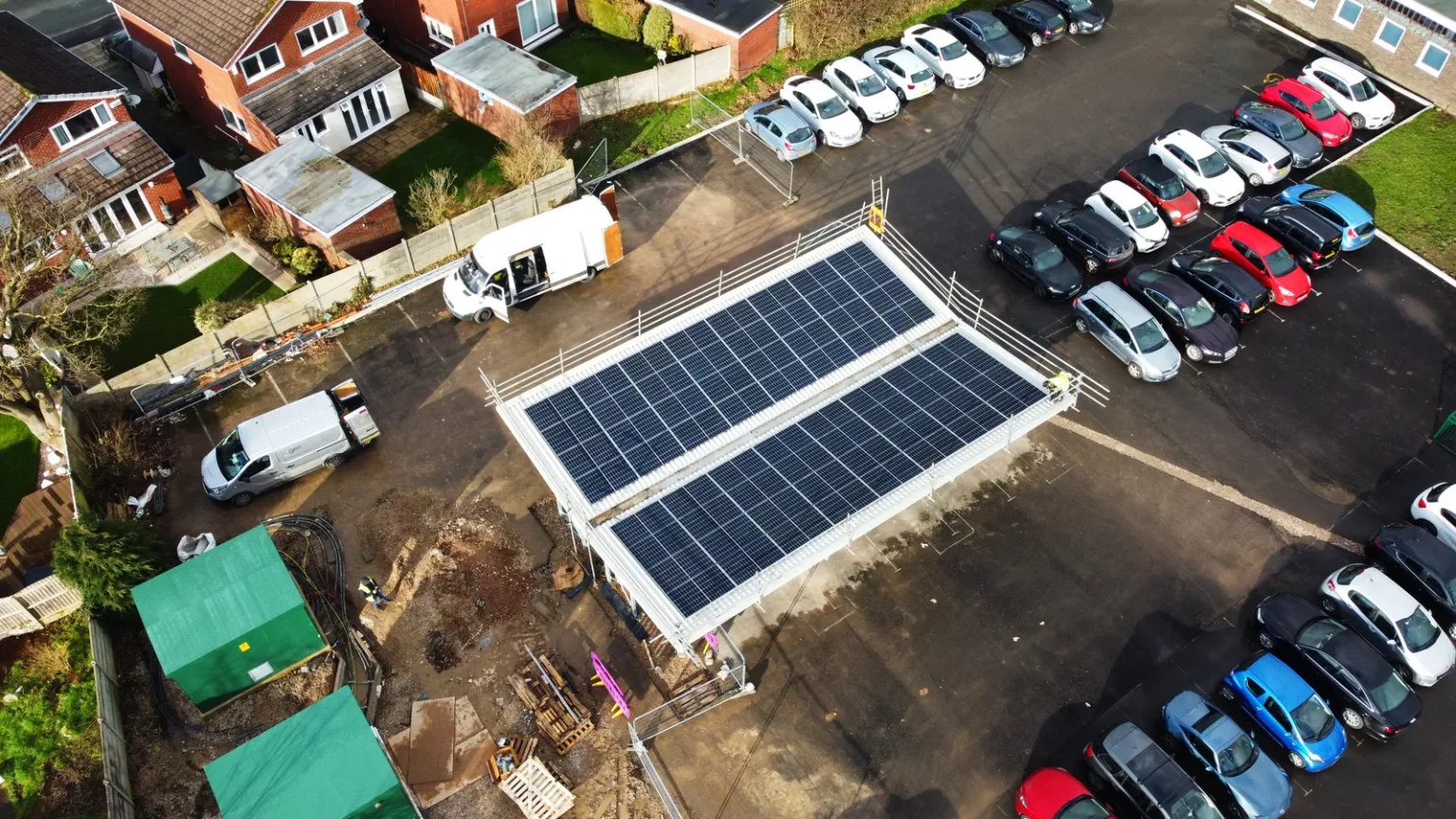
We review the available parking area, electricity consumption, existing electrical infrastructure, ground conditions, access and any potential planning constraints.
Our design team develops the proposed layout: the car-port structure, solar PV array, electrical design and expected annual generation. Where required we coordinate structural engineering, foundations, drainage, DNO applications and planning.
The foundations and supporting structure go in first, followed by the solar PV modules, cabling, inverters and associated electrical equipment. Access to sections of the car park may be restricted temporarily during the works.
The system is fully tested and commissioned before being connected to the site's electrical infrastructure, with EV charging and battery storage integrated where they form part of the design.
Small car port
Medium car port
Large car port
Typical annual generation per installed kWp
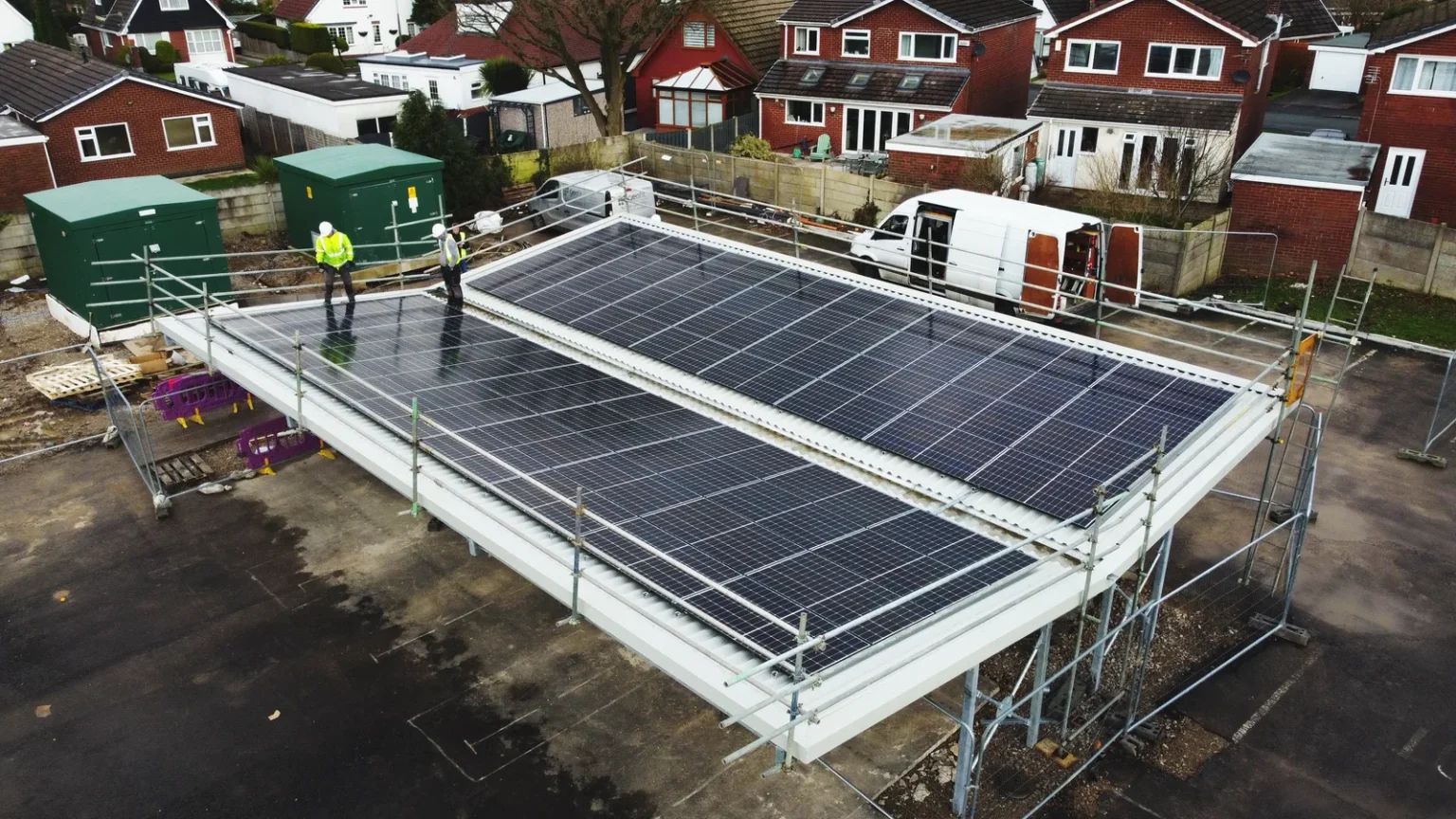
The size of a solar car port depends mainly on the number of parking spaces available and the site’s electricity demand. A 250 kWp system, for example, could typically generate around 200,000 to 237,500 kWh a year, depending on location, orientation, shading and system design.
Single, dual or multiple EV charge points can be integrated beneath the canopy, battery storage is optional, and every system comes with online performance monitoring. Typical applications are schools, workplaces, healthcare, retail and public-sector sites.
Genfit installed a 23.4 kWp solar car port at Archbishop Temple High School in Fulwood, Preston, making use of the school’s existing parking area to generate renewable electricity without taking up additional land.
The system uses 64 LONGi 365 W solar panels paired with a SolarEdge SE16K inverter and 32 SolarEdge P801 power optimisers. Recorded annual generation is approximately 20.2 MWh, a specific yield of 863 kWh per kWp.
It shows how schools and other organisations can turn existing parking areas into productive renewable energy assets while keeping the space underneath for vehicles.