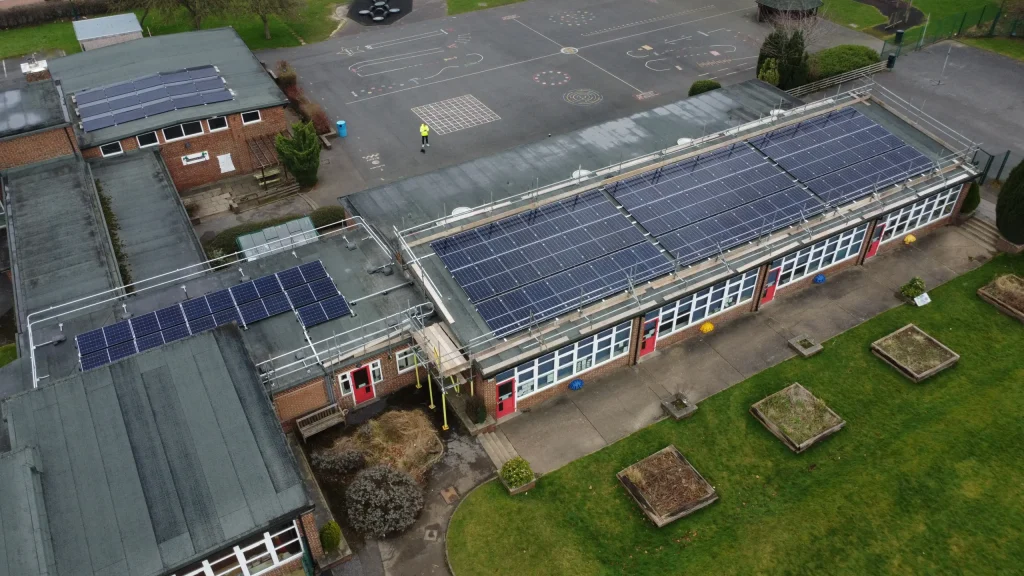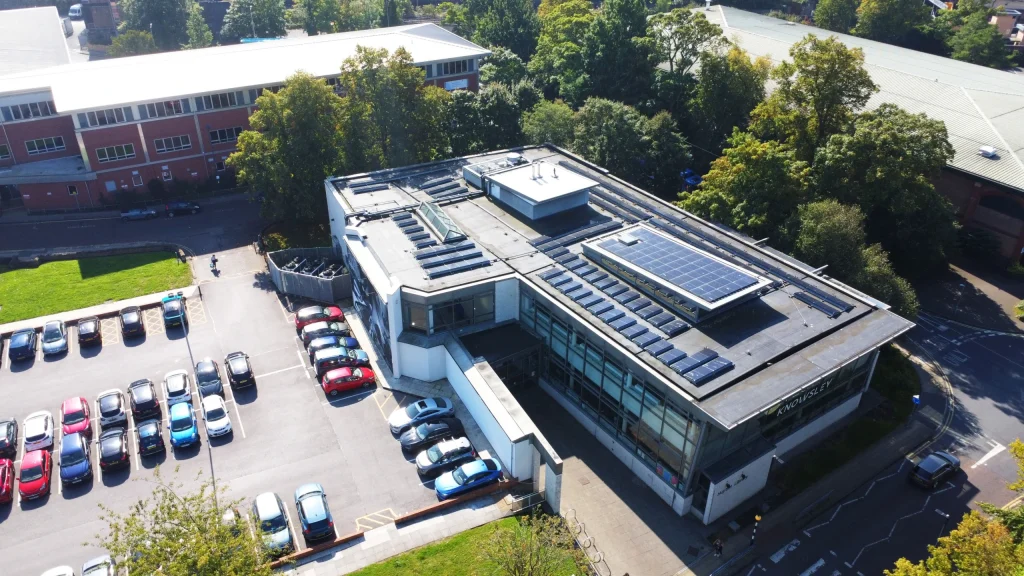
























Education and public-sector buildings tend to have consistent daytime electricity demand, so much of what the panels generate is used directly on site rather than exported. Schools, colleges, universities, healthcare facilities, offices and community buildings with suitable roof space, car parks or land all work well.
We recommend solar where a site has predictable consumption and intends to stay in use for the long term. Where daytime consumption is low, the roof is heavily shaded or the electrical infrastructure is a constraint, we will suggest a different system design or add battery storage alongside the PV.
Our approach starts from the site’s actual energy usage, not from the maximum number of panels that would fit.

We review energy usage, available roof or land and the existing electrical infrastructure, then survey the site to confirm roof construction, access, connection points and any practical constraints.
Panel layout, inverter configuration, expected annual generation and estimated on-site use. Where required we manage structural assessments, DNO applications and coordination with other contractors and facilities teams.
Installation is planned around the operation of the site, which matters for schools, healthcare facilities and other occupied public buildings.
The system is tested, commissioned and handed over with documentation and monitoring access, with ongoing maintenance and monitoring available afterwards.
Smaller schools, clinics and community buildings: roughly 25,000 to 45,000 kWh a year
Larger schools, academies and public buildings: roughly 45,000 to 135,000 kWh a year
Colleges, universities, hospitals and larger estates: roughly 135,000 to 450,000 kWh a year
Large campuses and multi-building estates: 450,000 kWh a year and up
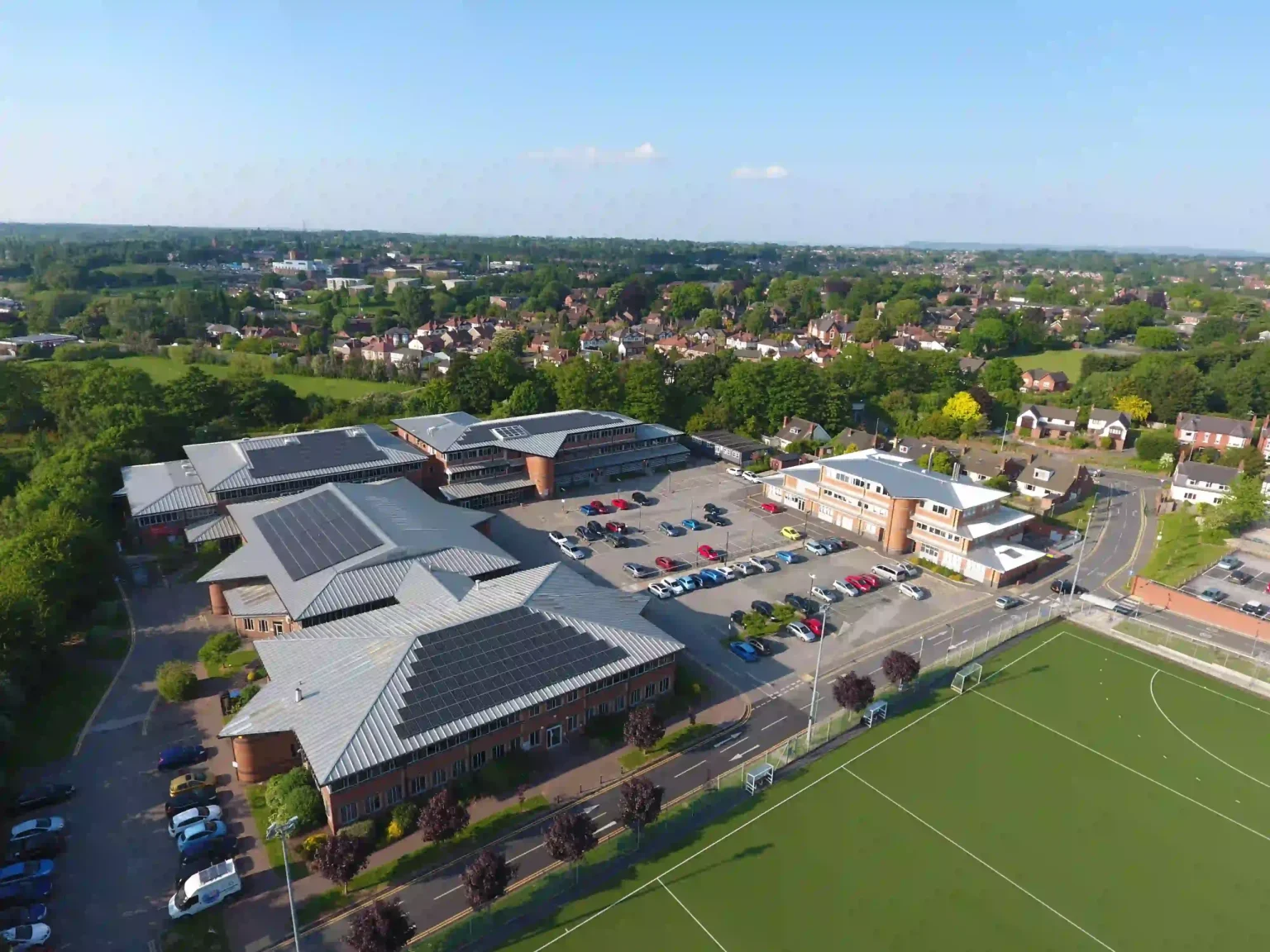
Genfit delivered a large-scale solar programme for the University of Chester, with systems installed across ten separate buildings to increase on-site renewable generation. Each building needed its own assessment and design, taking in roof space, construction, orientation, electrical infrastructure and connection requirements, and the work was coordinated across the estate to minimise disruption.