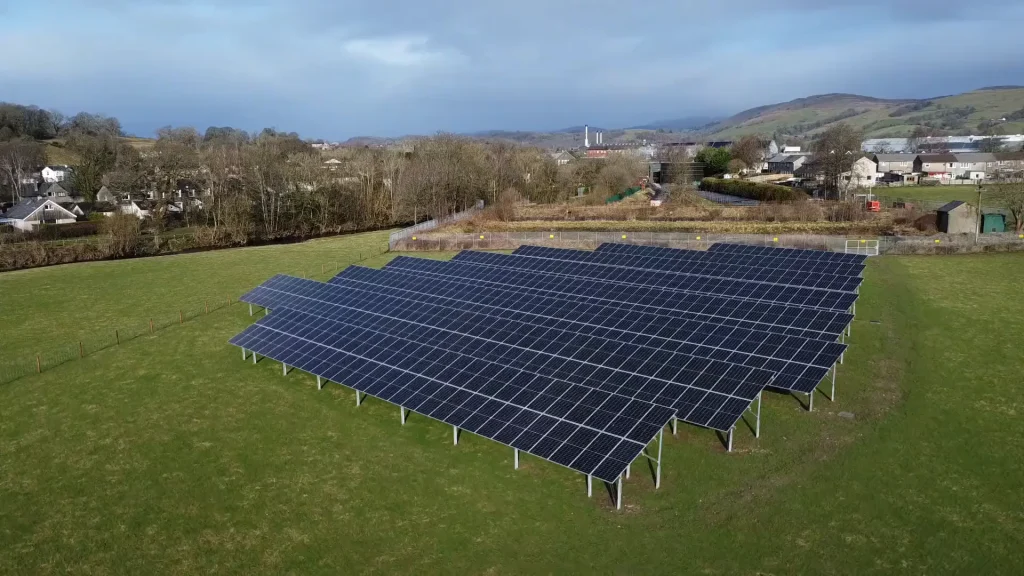























Ground mount suits organisations with land close to their electrical supply, especially where the roof is restricted or can’t take the load. The array can be angled for maximum generation, and sized beyond what a roof could hold. Where a suitable roof is available, rooftop solar is often simpler.
We look at the available land, ground conditions, shading, access, electricity consumption and the site's existing electrical infrastructure.
The design sets the array size, panel orientation, mounting system, inverter arrangement, cable routes and expected generation. We assess the grid connection and complete the DNO application, and advise where planning permission, ecological assessments or ground investigations are needed.
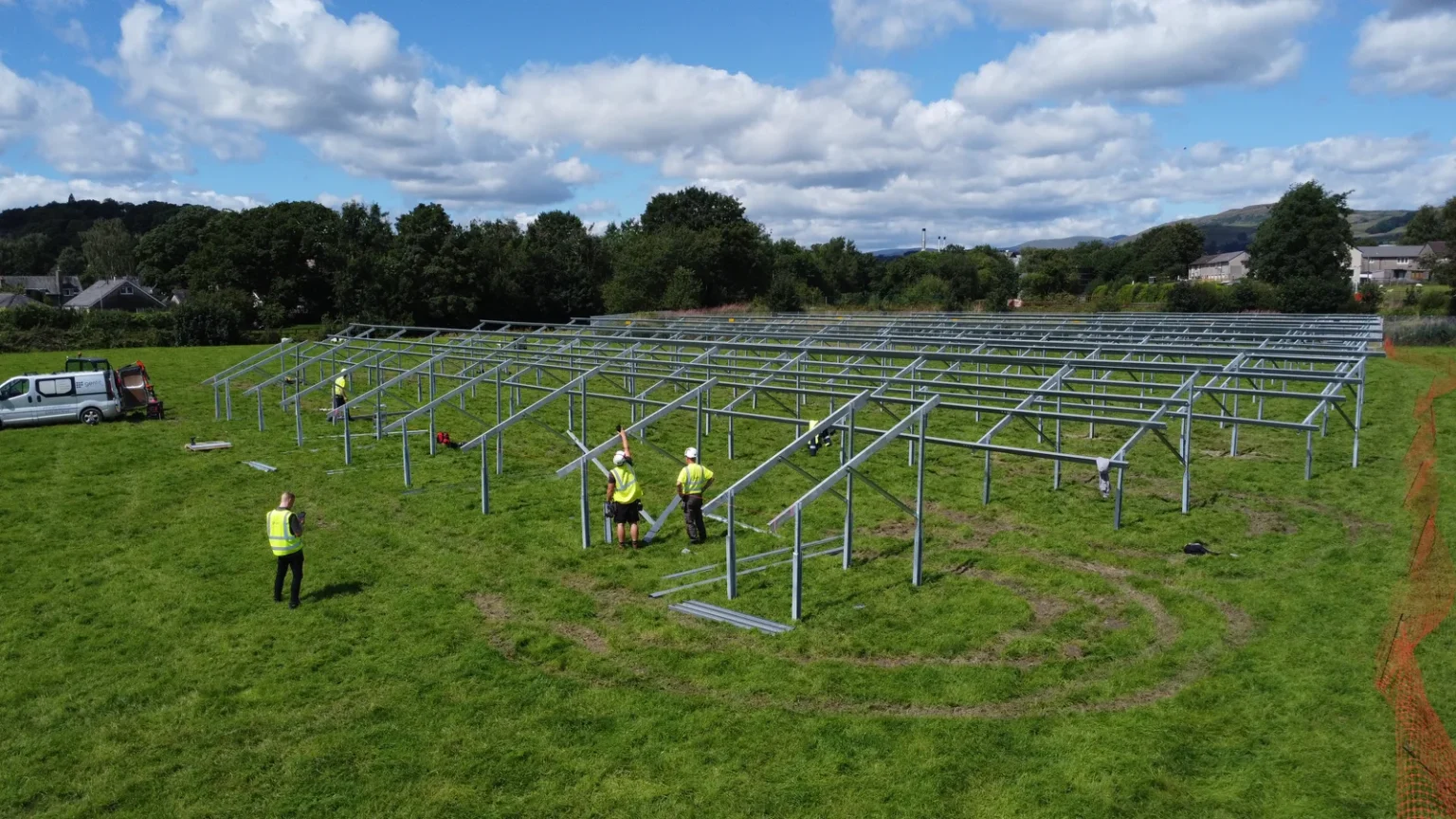
The mounting structure goes in using the most appropriate foundation method for the ground conditions, followed by the solar PV modules, DC cabling, inverters and associated electrical equipment.
The system is fully tested, commissioned and connected to the site's electrical infrastructure. Online monitoring is configured so both you and Genfit can track performance.
Small commercial system
Medium system
Large system
Utility-scale commercial projects
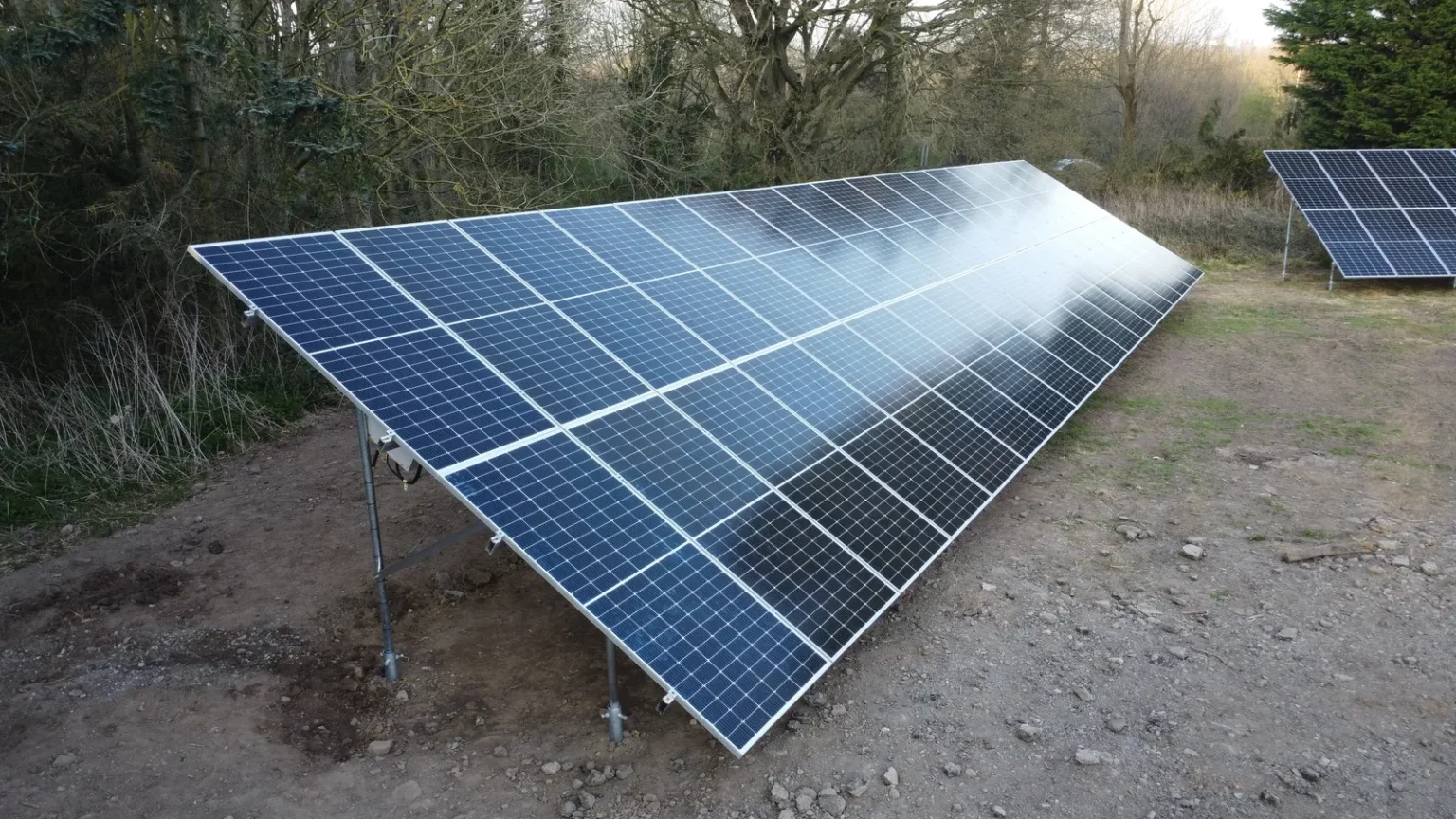
Commercial ground-mounted systems vary significantly with the available land and electricity demand. A 250 kWp system could typically generate around 200 to 250 MWh of renewable electricity a year, depending on location, orientation, shading and system design.
Systems use a fixed-tilt ground-mounted structure, can integrate battery storage, and come with remote generation and performance monitoring.
Genfit delivered a 253.8 kWp ground-mounted solar PV installation for James Cropper at the effluent plant on its Burneside site.
The array uses 564 LONGi 450 W solar panels connected to two SolarEdge SE100K Synergy inverter systems with 141 SolarEdge M1600 power optimisers. Recorded annual generation is approximately 219 MWh, a specific yield of around 861 kWh per kWp, saving approximately 116 tonnes of CO₂ a year.
It shows how available land can generate a significant proportion of a commercial site’s electricity without relying on additional roof space.